I’ve graduated, now what?

(NOTE: Following is an introduction to a series of columns in which experienced experts will discuss each career path option in detail.)
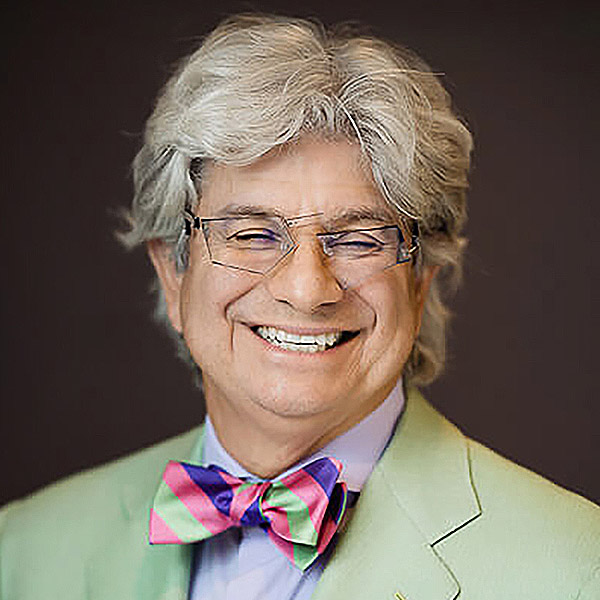
By Paul Fugazzotto, DDS
If you are newly graduated from dental school, the practice landscape most likely feels quite different from when you entered college. If you come from a “family of dentists,” it may feel like you have traveled at warp speed and entered an alternate reality. Graduating dentists are given the impression that their career paths are severely limited, due to a combination of their significant financial debt and the fact that “all of the practices are being bought up.” None of this is true.
The essence of clinical dentistry remains unchanged. While it is true that a practicing dentist no longer cuts hair or performs general surgery, it is also true that all ethical clinical practices, regardless of their specific practice milieu, are characterized by caring, clinical acumen and a desire to keep learning.
Practice opportunities of varying shapes and forms are all still feasible today. However, before deciding upon a path, a graduating dentist must perform an introspective examination and answer key questions for themselves:
- Do I need/want to be “in charge”?
- Can I work well with a group of peers?
- Will I be comfortable being told how to practice?
- Am I willing to “take my work home,” including evening meetings, dinners, etc., or do I desire more conventional “9 to 5” employment?
Now come the tougher questions to pose to yourself and answer honestly:
- Am I insightful enough to assess opportunities without an advisor?
- Am I able to extricate myself from a situation if I find it is not what I expected, in a timely manner?
Stories that are all too common:
- A graduate who joined a private practice with the promise of “a mutual decision one to two years out” as to whether the graduate in question would begin the buy-in process to partnership found himself asking about the opportunity year after year for six years, until he finally realized the promised opportunity was not going to develop. While he offered numerous reasons for why he remained in this practice for six years before leaving for other opportunities, he ultimately admitted it was a combination of inertia and fear of the unknown.
- A female periodontist who joined an existing practice upon graduation found herself subjected to inappropriate comments almost immediately. After seeking advice, she left the practice and spent a few months researching and finding a better opportunity.
- An oral surgeon who sold her young practice to a DSO felt she had made the right move for two years, then the DSO was bought by a larger DSO, and “the rules changed.”
- A prosthodontist who sold his practice to a “new kind of group,” where the doctor maintained autonomy in treatment decisions, quickly found out that while he would indeed still decide how to prepare a tooth, he had no input with regard to materials used, laboratories selected or staff employed.
The above examples are only meant to serve as cautionary tales. There are many thousands of graduates who have found practice environments that suit their temperaments, match their value systems and fulfill their desires.
What are the post-graduation clinical practice options (hybrids of the options below will not be explored, as the combinations are endless)?
Opening a de novo practice: Often viewed as an impossibility due to a combination of financial commitments and high levels of corporate and private competition, this option offers the highest degree of autonomy and potentially of stress as well.
Joining an existing practice, with a desire to become a partner: Viewed as a means by which to be mentored and maintain some autonomy, eventually leading to full autonomy and responsibility, this option is situationally dependent, as seen from one of the above examples.
Working for a DSO: While all management and financial practice stresses are removed, autonomy is usually nonexistent. In addition, the potential for “inertial comfort” is significant.
Purchasing an existing practice: While financially impractical for many recent graduates, such a purchase may offer both an immediate patient base and income flow while retaining autonomy, albeit with significant business stresses.
For specialists, working in a number of private practices: Theoretically a means by which to eliminate management and marketing stresses while still being profitable, this peripatetic option may prove tiring and uniquely stressful when working in disparate practice settings.
So, which one is right for you?
As we explore each option with guest columnists with significant experience regarding each career path, it is paramount to remember the following:
You must look inside yourself first. If you do not openly and honestly face your own fears, desires and limitations, the chances of you maximizing your potential and happiness will be severely compromised.
“What we achieve inwardly will change outward reality.” – Plutarch
Your first career choice need not be, and often won’t be, your final one. Timidity and/or ostrich impersonation is valueless at best and catastrophic at worst.
If this exploration seems daunting, you can always fall back on an old rocker who is still performing:
“Yes, I think it can be easily done…” – Bob Dylan, Highway 61 Revisited