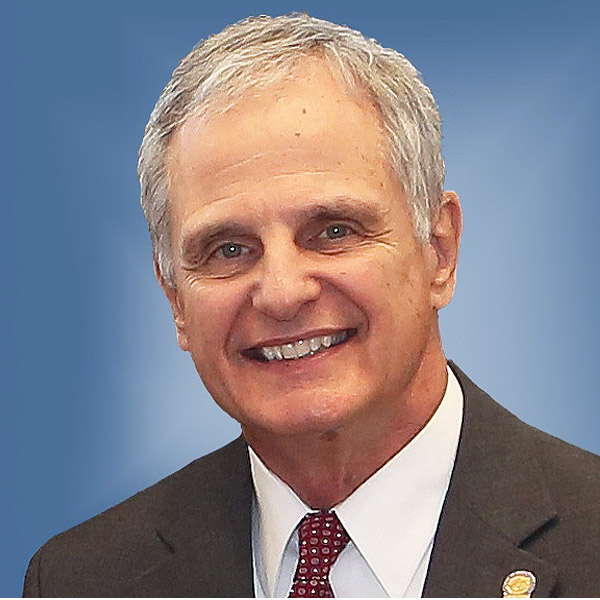
Dr. Ed Sevetz, Jr.
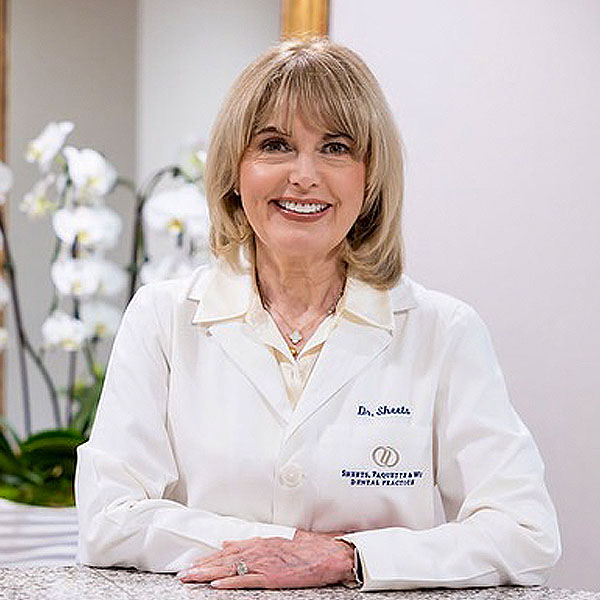
Dr. Cherilynn Sheets
ADVERBS
By: AO Fellow and Diplomate, Ed Sevetz, DMD
What is an adverb? An adverb is a part of speech that modifies or enhances a verb. “OK, but what does that have to do with osseointegration?” Glad you asked. Please allow me to explain and give the reason for using this part of speech for this article in the AO Newsletter.
Occasionally. Rarely. Uncommonly. Those are all perfectly good, descriptive adverbs that mean something doesn’t happen very often. You might be thinking, “Yeah, so what?” It’s not a “what.” It’s a “who.” No, not the kind of “who” imagined into existence by the late, beloved Dr. Seuss, although this “who” is also a doctor. A different kind of doctor. One who has imagined into existence something we can all use to quantitatively make a noteworthy, beneficial enhancement in the dental health of our patients.
Allow me to introduce the “who”: Dr. Cherilynn Sheets. Those adverbs above are perfectly suited to her. At first glance, one might think, just another member of the Academy of Osseointegration. So? There are thousands of them worldwide. Why did her “footsteps” cross the path of AO so infrequently?
Let’s take a step back for a moment and look at what makes this rarity “tick.” Dr. Sheets’ family tree seems to have its “roots” formed more from enamel and dentin than tree “bark.” She has so many dentists in her family tree that one could argue that the “D” in her DNA stands for dentist. By the latest “census,” her dad, an uncle, an uncle-in-law and two cousins all became dentists. Her mom and two aunts were dental assistants. One wonders, if under her early Christmas tree, did she find such gifts as a “mirror and explorer?” But there was little wonder why, by sixth grade, she decided she would also become a dentist when she grew up, despite the fact that dentists, back in the “olden” days, were predominantly male.
Let’s now transition from the “who” to the “what” and the “why” to explain the paradigm-shifting claim that ended the second paragraph above.
Being a bright, hardworking student, Cherilynn was admitted to dental school early to pursue the precision profession of dentistry. Along the way, her pursuit of that precision was her compass by which she navigated her pathway. To her, it was less than satisfying when at times she realized that some data about progress or a diagnosis were subjective and not quantitatively measured. It bothered her that one dentist’s diagnosis might not be the same standard as others. Couldn’t there be some measure that would be a standard by which an outcome, or diagnosis, would be uniformly agreed upon?
She pursued her career for precision in prosthetics and peri-prosthetic problems and solutions. More than 30 years ago, this led her to consult with the dean and a professor at the University of California at Irvine College of Engineering. Together they collaborated to achieve both hardware and software that would precisely and objectively quantify data needed to take the care of dental restorative work to a level only imagined before, despite being deemed clinically unreachable.
So now, thanks to this relentless pursuit of precision, a new technology has been gifted to the dental profession through Cherilynn’s persistence for perfection for patients. A diagnostic, handheld instrument, similar in dimensions and shape to the ubiquitous operatory handpiece, can touch an implant and objectively give data as to how sturdy it is in bone, even after restoration, without having to disassemble it to touch the implant or abutment. It can even tell when it would be ready to restore, after allowing for osseointegration to take place. Don’t take my word for it — the FDA has given its approval for this. What does that mean for dentistry? No more having to guess when an implant is ready to restore, and it alerts if a problem is asymptomatically developing. The dentist would know. The hygienist would know. Their studies have progressed beyond working with implants. Wouldn’t it be helpful to know if a natural tooth is cracked, even though clinical observation and radiographs couldn’t reveal it yet? One could also track and trend tooth mobility over time. This is accomplished by simply touching this proven technology to an implant (single or multiple restorations, without disassembly) or to natural teeth. This, and more, has been studied for more than 10 years now, thanks to Cherilynn’s pursuit of precision for our patients’ enhanced oral health.
Lest you think Cherilynn is some kind of hardware “geek” with a computer for a heart, check this out — she has a deeply compassionate heart for those with dental needs. She is the founding president of the National Children’s Oral Health Foundation, which helps nonprofits around the country that provide oral health services and education to children by providing grants and other assistance. This philanthropic organization has been called “America’s Tooth Fairy.”
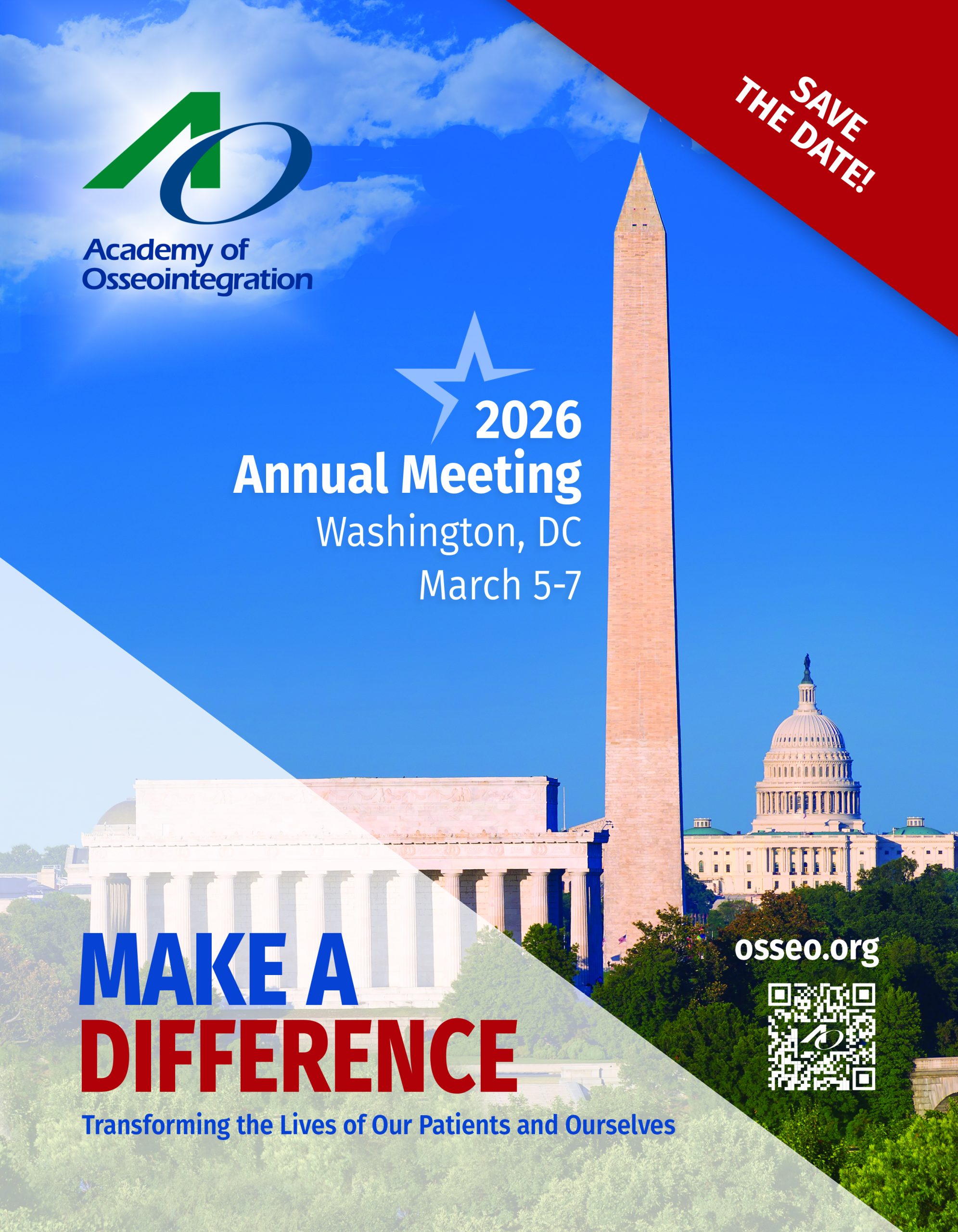
If you want to learn more about how this FDA-approved technology can benefit your patients, whether your office is family practice or a specialty, attend the AO’s next annual meeting in Washington, D.C., where Dr. Cherilynn Sheets will be present on the podium. In the meantime, it is hoped you now have a greater appreciation for “lowly” adverbs. Seriously?