Beyond the screw: Reconsidering abutment selection in implant prosthodontics
By Dr. Mohamed Rahhal, associate professor, prosthodontics specialty care unit director, interprofessional education director, MOSDOH-ATSU

Dr. Mohamed Rahhal
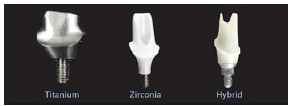
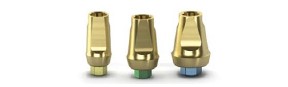
As prosthodontists and implant clinicians, we often focus heavily on surgical precision and osseointegration. Yet the success of implant therapy is increasingly defined by prosthetic planning, particularly the abutment, which serves as both a mechanical connector and a biological influencer. Abutment selection goes beyond the basic choice of titanium versus zirconia, or stock versus custom. It is a strategic, case-specific decision that must consider the patient’s anatomy, soft tissue behavior, aesthetic expectations and long-term maintenance needs. In anterior restorations, I often prefer custom zirconia abutments for their excellent tissue response and lifelike translucency. However, when strength is a priority — especially in posterior, load-bearing areas — stock titanium abutments remain a dependable choice.
In cases that demand both strength and superior aesthetics, hybrid abutments have become a valuable option. These combine a titanium base for optimal implant connection and durability with a ceramic or zirconia outer structure to mask the metal and enhance aesthetic integration. This dual-layered design makes hybrid abutments a privileged solution when clinical and cosmetic demands intersect.
Recent focus on critical and subcritical contours has reshaped how we approach prosthetic emergence. The critical contour — within 1 millimeter of the gingival margin — significantly influences the final position of the soft tissue. A convex profile here may lead to apical displacement of the gingiva. Below it, the subcritical contour, when designed concavely, promotes soft tissue volume and stability, creating not only a seal but a scaffold for long-term aesthetic success.
The material surface and finish of abutments further impact tissue health. While zirconia leads in biocompatibility, polished titanium and lithium disilicate offer durable, tissue-friendly alternatives. However, material choice must align with patient sensitivities, location and aesthetic expectations.
In posterior regions, the restorative platform diameter becomes a critical biomechanical factor. Narrow platforms may restrict ideal emergence profiles and lead to over contoured restorations, while wider platforms enable more favorable soft tissue shaping and load distribution.
As digital workflows become standard, CAD/CAM abutments offer unmatched customization — but they demand precision in scan body use, lab communication and milling protocols. This transition underscores the need for continuous collaboration between clinicians and technicians.
In my teaching, I stress to students that abutment choice is not isolated — it reflects the entire diagnostic and restorative vision for the case. It’s where the art of aesthetics meets the science of function, guided by evidence and shaped by experience.
The future of implant dentistry lies not just in placing implants but in mastering the prosthetic interfaces that define long-term success. Abutment selection, once seen as a routine mechanical task, must now be viewed as a central component of biologically driven, patient-centered care.