I Gotta Be Me: The Art of Complementary Practice

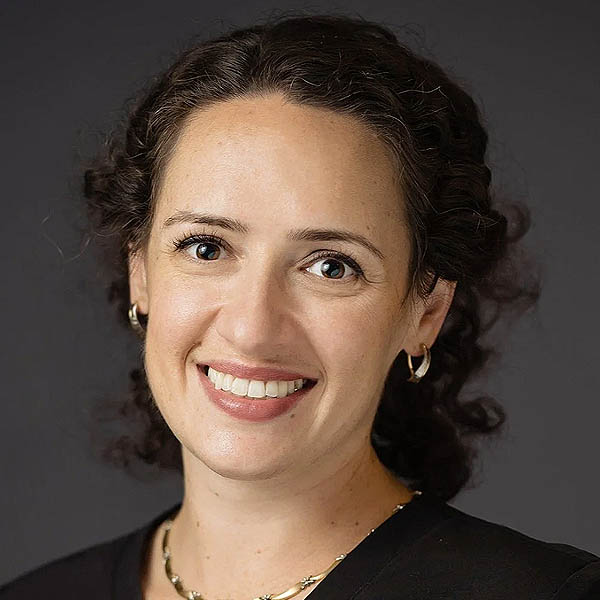
Dr. Anya Rost
By: Anya Rost, DMD, MSD
Teamwork has become more critical to patient care than ever.
In the world of periodontics, there is a prevailing myth that clinical excellence alone guarantees a full schedule. We leave residency believing that if we can cut, suture and graft with precision, the referrals will simply materialize.
My reality check came early. Having been trained by a group of incredible educators who instilled in me a rigorous standard of care and strong clinical skills, I left residency confident in my hands, ready for whatever the periodontal life would throw at me. But I also possessed a sobering work ethic: I knew that in the real world, nothing would be handed to me on a silver platter.
This became evident during my job search. After sitting through several disturbing interviews with practices that seemed to prioritize profit margins over patient outcomes, I finally found my landing spot. I joined a practice led by a person who is world-renowned — well-published and well known, an excellent clinician and incredibly fast. In addition, practicing in the Boston area, or Massachusetts in general, there are more periodontists and oral surgeons than one can count.
This presented a unique challenge: How do you build a personal brand not only when you are surrounded by lots of periodontists but when you are standing in the shadow of a giant within the practice? How do you get referrals and avoid becoming merely the “overflow valve” for the senior partner?
I realized that trying to replicate his brand would be a mistake. He dominated the market on efficiency and quality. To succeed, I didn’t need to be faster; I needed to be different. I had to build a “brand within a brand.”
My first strategic pivot was tonal. My unique brand would be solace.
I identified a large demographic of patients — and referring doctors — who felt intimidated. I positioned myself as the easy-to-reach, empathetic alternative. I focused heavily on anxiety reduction and patient education, sitting knee-to-knee with patients to explain the “why” behind the procedure. I wasn’t slowing the practice down; I was capturing the patients who needed time to say “yes.”
I also expanded our clinical menu. While I have a deep passion for soft tissue grafting and complex cases, I also introduced procedures the practice wasn’t previously known for, such as surgically facilitated orthodontic therapy and MARPEs. This didn’t just differentiate me; it opened doors to additional referral sources.
However, clinical skills are useless if no one knows you have them. I had to do the legwork.
I noticed a gap in our local professional community. The “Old Guard” networks were strong, but they could be intimidating for younger associates or new practice owners. Instead of waiting for an invitation to the table, I built my own restaurant. I founded a local chapter of the Seattle Study Club a Dr. Anya Rost nd a Women Dentist Study Club.
These weren’t just networking events; they were safe spaces for peers who, like me, were navigating the complexities of modern dentistry. By bonding with younger dentists and women dentists in the field, I wasn’t poaching my partner’s network; I was activating a dormant one.
Perhaps the most critical factor in my growth was shifting from a vendor mindset to a teammate mindset. I adopted a policy of “frictionless access.” I told every referring doctor, “Don’t worry about calling the front desk. Text me directly.”
This accessibility allowed me to become a “safe harbor” for both complex referrals as well as complications. When a general dentist has a surgical mishap or a complication, they are terrified. I made it known that I would fix these issues without judgment. We are dealing with biology and human beings; mistakes happen. By rescuing these cases with kindness rather than scolding, I earned undying loyalty. Doctors don’t just send me their headaches now; they send me their families.
Finally, I tweaked the administrative workflow to reinforce my identity as an educator. In my referral acknowledgment letters, I didn’t only send text. I began including highquality clinical photos of the treatment — before, during and after.
This was a small touch, but it had a massive impact. It provided transparency to the referring GPs and allowed them to learn along with me. A routine piece of correspondence became a portfolio of competence.
Today, our practice has three doctors, each with a distinct personality and love for different procedures. If a patient doesn’t mesh with one provider, they stay within the practice with another. We have achieved a true symbiosis.
The greatest compliment I receive isn’t a check; it’s a referral from an existing patient or a call from a dentist who has never worked with my partner but heard I was the right fit for a complex soft-tissue case.
Building an identity wasn’t about shouting louder than the other guy. It was about listening to the quiet needs of the market — the need for empathy, for education and for a safe harbor — and answering them with excellence.
People appreciate providers who care, and that, ultimately, is the foundation of a lasting career.