“It Is Both”
by Bruce Barr, DDS
When Connie Francis sang her international hit song “Where the Boys Are,” she was not thinking of the boys who appeared in the driveway of her Mafioso brother, George Franconero, on March 7, 1981, leaving him with two bullets in his head. A power move thwarted? A drug deal gone bad? Or perhaps the Genovese family was not happy to learn he was giving secret testimony to the FBI and the U.S. Organized Crime Strike Force about their infiltration of the union dental market?
Yes, the mob recognized dentistry as a lucrative business long before the dental service organizations. The two syndicates are, however, unnervingly alike. It is difficult to imagine the Don and his consigliere bickering over the true definition of a Morse taper; for gangsters, dentistry is merely another income stream running parallel to flows from loan sharking or prostitution. Similarly, venture capitalists do not meaningfully differentiate their stakes in DSOs from investments in other moneymakers such as internet startups and shale oil. If anything, the reliable payday that DSOs yield offsets riskier plays. Both operations need a “front man” with a license to function and comply with state board regulations.
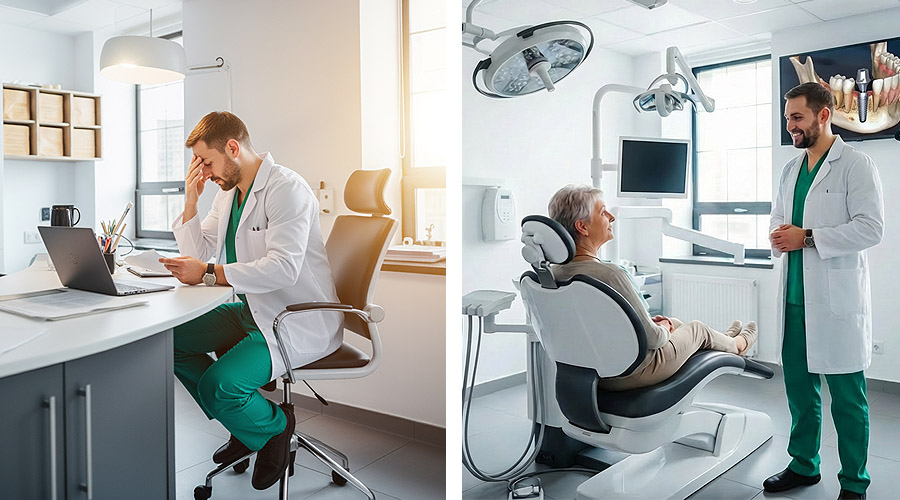
Profit margins, not crown margins, guide investors. For dental practitioners, however, precise crown margins are indeed paramount, as are the more conscience-driven margins of acceptable care for our patients. Ethically, we are motivated to do the right thing by those who entrust their health to our expertise. Professionally, some of us are also required to perform for corporations that may prioritize the bottom line over patients’ well-being. The tension between these responsibilities defines our field today.
DSOs are neither good nor bad. Rather, they offer an alternative to private practice and have become an increasingly necessary haven for young dentists. Student loan debt, compounded by the ever-rising price of equipment and ever-shrinking insurance fees, often renders the upfront costs of opening an office insurmountable. For older independent dentists preparing to wind down their clinics, DSOs can provide a fruitful off-ramp. Further, regardless of age, many practitioners simply prefer to focus on treatment free from the logistical overhead of running an office. If the aggressive practice of tapping patients’ benefits continues unchecked, it seems inevitable that insurance companies will seek to protect themselves through vertical integration, purchasing DSOs in order to bound expenses.
The key question then is: Who regulates? Unlike medicine, with its raft of accrediting bodies, dentistry is subject to scant oversight. Scrupulous quality assurance by more objective third parties would likely benefit our industry, but external monitoring alone would not be sufficient for enforcing thresholds of care. The supervision must source from within. That is why it is imperative that dentists participate in the very institution that accredits our educational programs and legitimizes us — the ADA — regardless of whether they work in private practice or for a DSO. This organization and others like the AAP, AAMOS, AAE, AAPD and AGD establish scientific standards of care that should be lodestars for dentists irrespective of venue. For DSOs, as for Michael Corleone in The Godfather: “It’s not personal, it’s strictly business.” For our dental peers, it is both.