If Time Could Take Me Back to My Final Year of Periodontics Residency

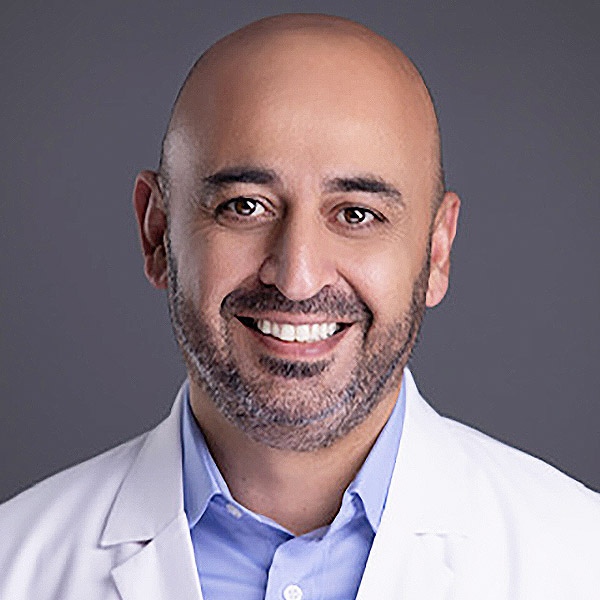
by Sam Bakuri, DMD, MSD
If time could rewind to my final year of periodontics residency, I would still carry the same passion for patient care, the same curiosity for learning, and the same gratitude for the mentors who shaped me. But I would approach the business of dentistry with an entirely different mindset — one grounded not only in clinical excellence, but in strategic foresight, financial literacy and leadership.
Dentistry is a beautiful profession. It offers us the privilege to heal, to restore confidence and to improve lives every single day. Yet, as fulfilling as it can be, it also has a harsh side — one that reveals itself when clinicians enter the real world without understanding how to navigate the financial and operational complexities of running a practice.
In life, there are two ways to learn: by absorbing the experience of others, or by walking through the fire ourselves. Most of us, unfortunately, learn the hard way. We pay for our lessons not only in money, but in time, stress and missed opportunities. Looking back, I wish I had recognized sooner that understanding business is not a distraction from clinical excellence — it is what allows clinical excellence to thrive sustainably.
The Changing Landscape of Dentistry
Since 2020, dentistry has been tested in ways few could have imagined. The pandemic exposed vulnerabilities in every aspect of the profession — from staffing shortages and patient hesitancy to supply chain interruptions and cost inflation. What followed was a steady escalation in overhead expenses. The cost of materials, rent and wages has risen dramatically, far outpacing the modest 2% to 4% growth rates most practices once relied upon.
The traditional financial model that once defined private practice no longer guarantees success. Today’s dentist must navigate a landscape where margins are thinner, insurance reimbursements are stagnant or declining, and competition — both from DSOs and within saturated markets — is fiercer than ever.
Dentistry in 2025 is not the same profession it was in 1985. The old formula — graduate, associate, buy a practice, work until retirement — has lost its simplicity. A dentist today must think strategically not only as a clinician but also as a business owner, investor and brand. The most successful dentists of this new era are those who combine exceptional patient care with data-driven decision-making and a deep understanding of how to build and scale a sustainable practice.
The Questions Every Young Dentist Should Ask
The first and perhaps most defining question a young dentist should ask is: Where do I want to live and build my life?
Are you anchored to a specific geography by family or personal preference, or are you willing to pursue opportunity wherever it exists? The choice between lifestyle and opportunity is not an easy one, but it sets the foundation for every professional decision that follows.
Next comes the question of how you want to practice. Will you join a large group or corporate entity? Do you envision a fee-for-service model or an insurance-based office? Are you driven by volume or by relationships? These are not abstract preferences; they define your daily environment, your patient base and your long-term financial potential.
You must also be honest with yourself about your career timeline. How many years do you plan to practice? How many days per week? What kind of lifestyle do you want to build outside of work? The answers will determine how aggressively you save, how you structure your business and how you ultimately exit.
Too often, young dentists rush into associateships or ownership opportunities without understanding how those decisions align — or conflict — with their larger life goals. A few years later, they find themselves relocating, restructuring or restarting entirely. Strategic clarity early on can save years of frustration and hundreds of thousands of dollars in lost productivity.
The Gap in Dental Education
Almost every dental school excels at teaching anatomy, pathology and surgical technique. But very few teach students how to read a profit-and-loss statement, negotiate a lease, interpret production reports or lead a team effectively. The result is a generation of talented clinicians who are unprepared for the realities of running a business.
Most dentists learn those lessons the hard way — five to 10 years into private practice — through mistakes that can range from poor financial management to inefficient scheduling, underpricing or failed marketing efforts. The cost of that learning curve can easily exceed half a million dollars, and for some, it leads to burnout or early exit from ownership altogether.
A dentist should never have to choose between being a great clinician and a successful entrepreneur. Both skill sets are essential, and both can be learned. The earlier we integrate business education into dental training, the better equipped our future colleagues will be to thrive rather than merely survive.
The Power of Strategic Planning
Success in dentistry is not accidental; it is engineered. Every dentist should enter the profession with a plan that outlines both the entry and exit strategies — how to build wealth, sustain growth and eventually transition gracefully.
That plan should include:
- Clear financial goals, defined not in vague terms like “make a good living,” but in specific, measurable numbers.
• Production targets, broken down annually, monthly and even hourly, to track efficiency and set realistic expectations.
• Fee analysis, ensuring that your pricing aligns with your expenses, location and desired profit margin.
• A growth strategy, which could include expanding services, investing in technology or acquiring additional practices.
• An exit plan, designed early enough to ensure financial independence and a smooth transition when the time comes.
A dentist who knows these numbers and plans accordingly will always have a stronger sense of control and purpose.
The Need for Continuous Business Education
The techniques and strategies that worked in the 1970s no longer apply today. The pace of change in technology, communication and economics has redefined what it means to manage a dental practice. Patients are more informed. Competition is more visible. Overhead is more volatile. To succeed, we must evolve with the landscape.
Continuous education — not only clinical but business-oriented — is now essential. Courses on leadership, financial planning, digital marketing and team management should be considered as important as implant or esthetic courses. Understanding how to build a brand, measure ROI and create systems is as critical to the modern dentist as mastering a surgical flap or restorative technique.
That is why I believe dental organizations and study clubs play an increasingly vital role in bridging this gap. Collaborative networks such as the Seattle Study Club and academies dedicated to leadership and practice growth are redefining the way we learn and support one another. They allow dentists to share data, strategies and insights — to learn from experience rather than through avoidable hardship.
Looking Ahead: Redefining Success in Dentistry
Dentistry will continue to evolve, and so must we. Artificial intelligence, teledentistry, digital workflows and new materials are reshaping how care is delivered. But no matter how advanced technology becomes, the human element — empathy, communication, integrity — will always be the foundation of success.
At the same time, success itself must be redefined. For some, it may mean multiple practice ownership; for others, it may mean a balanced lifestyle and meaningful patient relationships. There is no single blueprint, but every dentist deserves to make those choices intentionally, not by accident or inertia.
My hope for the next generation of dental professionals is that they enter this field equipped with both clinical excellence and business acumen. That they understand how to set goals, interpret data, lead people and adapt to change. And most importantly, that they see dentistry not merely as a profession, but as a platform for building a fulfilling, prosperous and purpose-driven life.
If I could go back to my last year of residency, I would tell my younger self this: Mastering your craft will open the door, but mastering the business will determine how far you walk through it.
Dentistry rewards those who plan, who adapt and who never stop learning. The future belongs to those who blend compassion with competence, and passion with prudence.